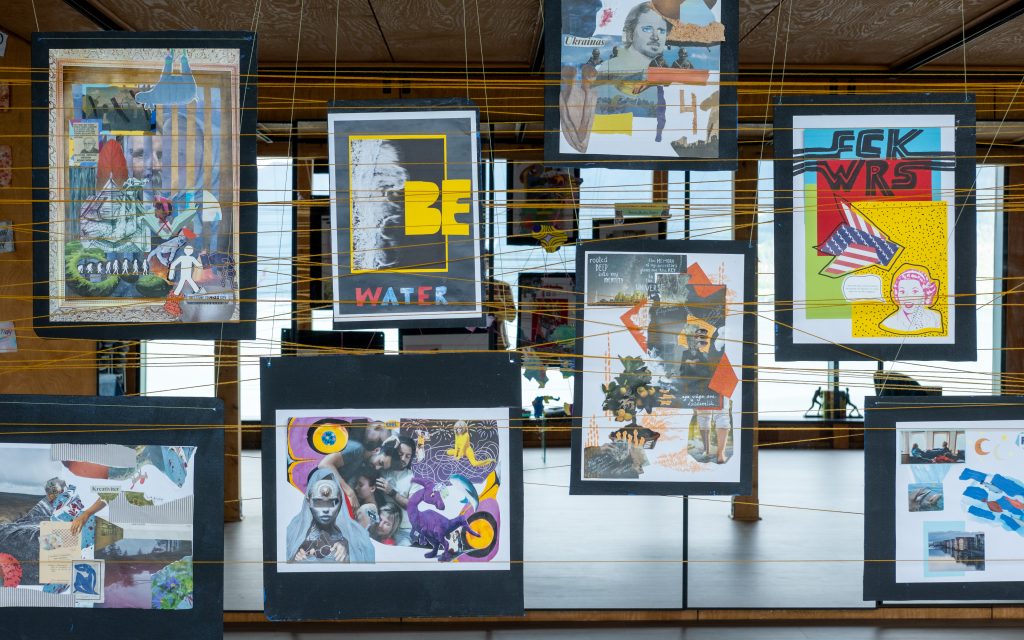
The role of art and creativity in the digital contemporary world is often reduced to its entertainment value and devalued as a practice with benefits for one’s wellbeing. However, activities related to creative processes are a valuable resource when helping people better express their values and beliefs. Considering this premise, the Creative Self training course, financially supported by the Erasmus+ Program through the Norwegian National Agency and implemented by Creative Connections Norway, explored how several creative methodologies can serve as a useful non-formal education tool for working with local communities.
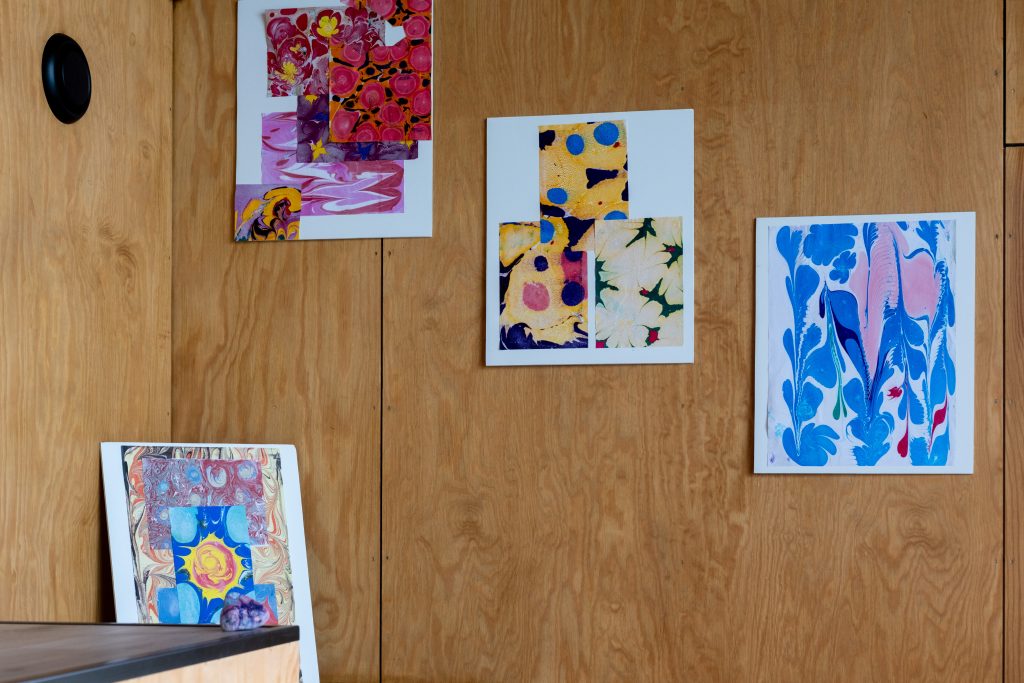
Ebru is an ancient Turkish art practice that uses paint droplets floating in a thickened water that is then etched onto paper, clothes, or natural materials. As the paint settles quickly, this practice helps people to work better under pressure, improves their capacity for reacting to and working with the unpredictable, but also ultimately to be comfortable with losing some control over one’s actions and embracing the flawed aspects of the things they create.
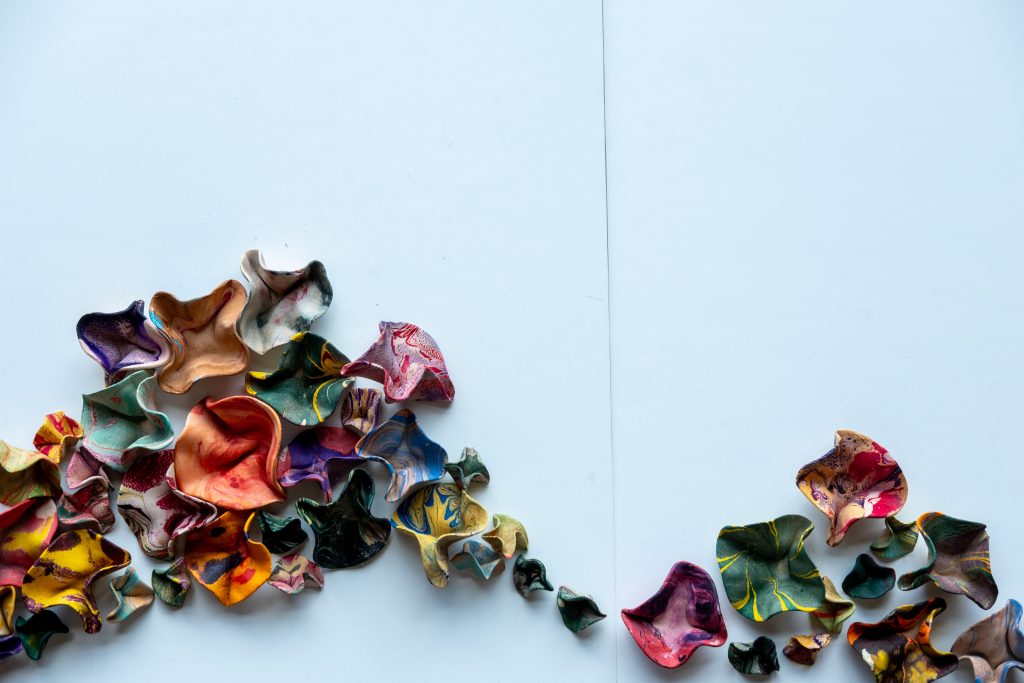
Ceramics, on the other hand, is a practice that entirely grounds people in the moment. The methodology balances the ephemeral, with the plasticity of the clay that can be shaped, moulded and reused, with the permanent, as when fired, the piece is set for ages. Here, engaging with the clay is therapeutic. It wants to be pressed, smoothed, paid attention to its details, even punched, if you need it to return it to a bloc. These stimuli are a very different experience from the ones people are used to in the digital age, with fleeting content, infinite feeds that we’ve forgotten about 30 seconds later, and flat touchscreens that seem to slide away from your fingers.
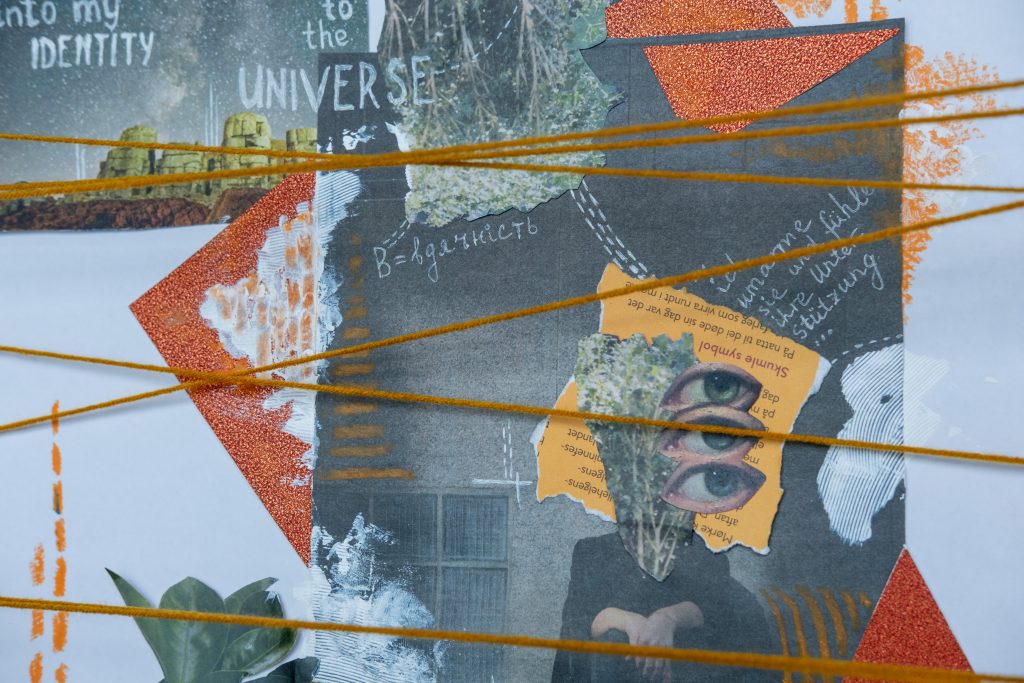
Lastly, the collage is a technique that uses printed materials rescued from the recycling or trash bin and rearranges them to create new content. It is a highly creative process that has barely any limit, considering the variety of cuts, layers and arrangements that can be made with the images, words, shapes and textures. This can be used as a vehicle for promoting messages, ideas and confronting people’s set ideas regarding the world. Once again, the texture and aesthetics of a collage piece contrasts highly with the contemporary means of communication, thus representing a valuable and standout media for raising awareness and helping people find creative solutions and points of view from every topic.
The training course took place in the Creative Connections Arthouse in Balestrand, Norway. This place provided the perfect setting for people to be inspired; the sheer expanse of the fjord, the comfort of the floating clouds and the impressive everchanging sky colours helps people direct their creative juices towards creative production, and demonstrates the importance of promoting public accessible and well-equipped spaces that can support community activities and the exploration of every person’s creative side.
This experience reinforced the idea that activities that promote creative reflection and production contribute highly to a tighter community and helps create more active citizens that are capable of sharing different ideas and perspectives and finding solutions for shared problems. You can find more details about these art methodologies in the online platoform Art for Inclusion.