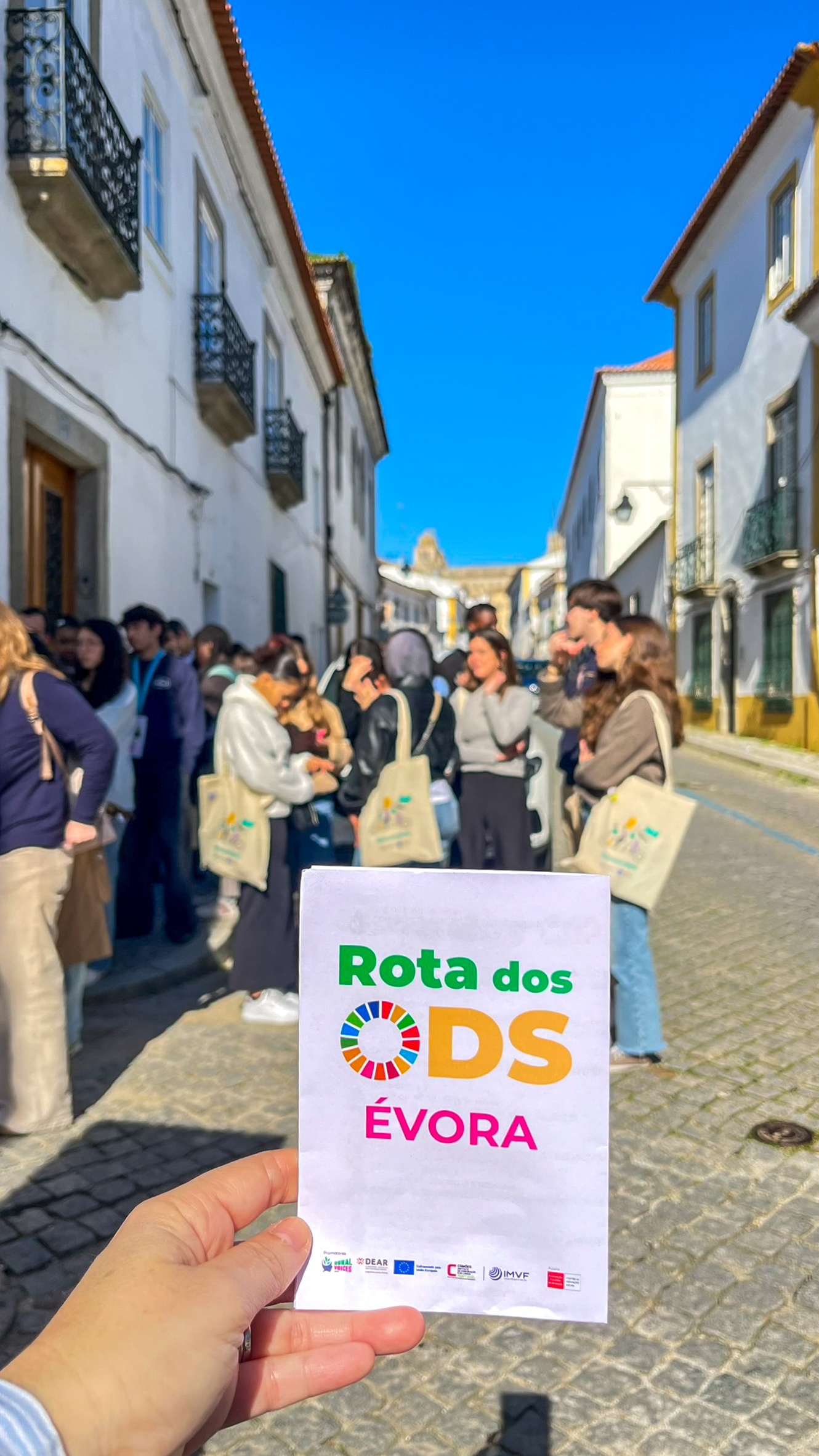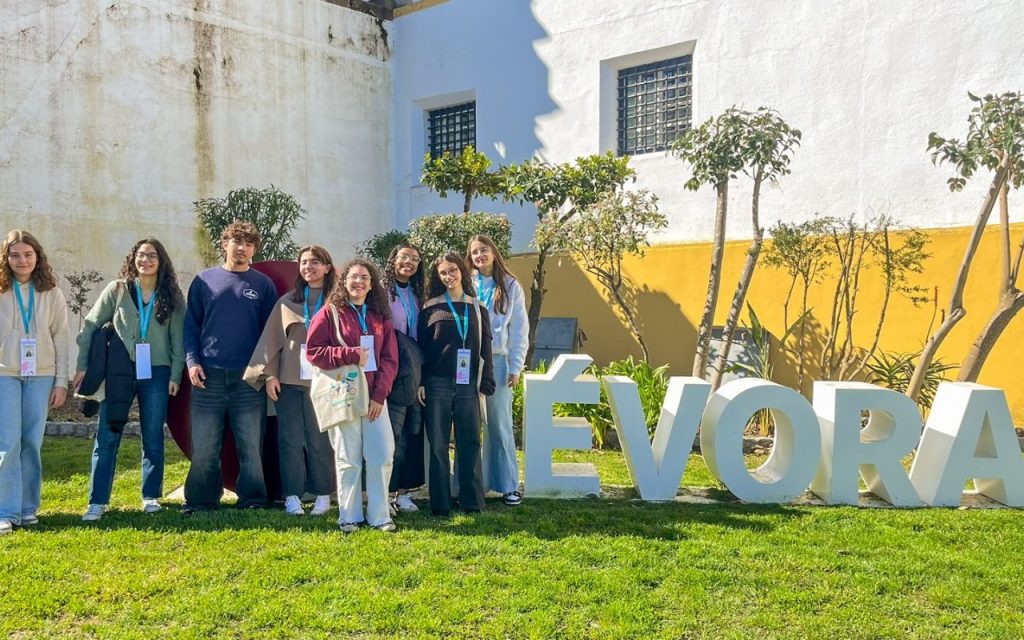
On a narrow, cobbled street in Évora, a small white-and-yellow building shines brightly under the sun. Surrounded by the history and heritage of the city’s historic centre, a group gathers outside the Centre for Social Innovation of the Eugénio de Almeida Foundation. This is the starting point of Évora’s newly inaugurated Sustainable Development Goals Route, an initiative created by young people that invites the whole community to look beyond the city’s past and reflect on its role in building a fairer, more inclusive and sustainable future.
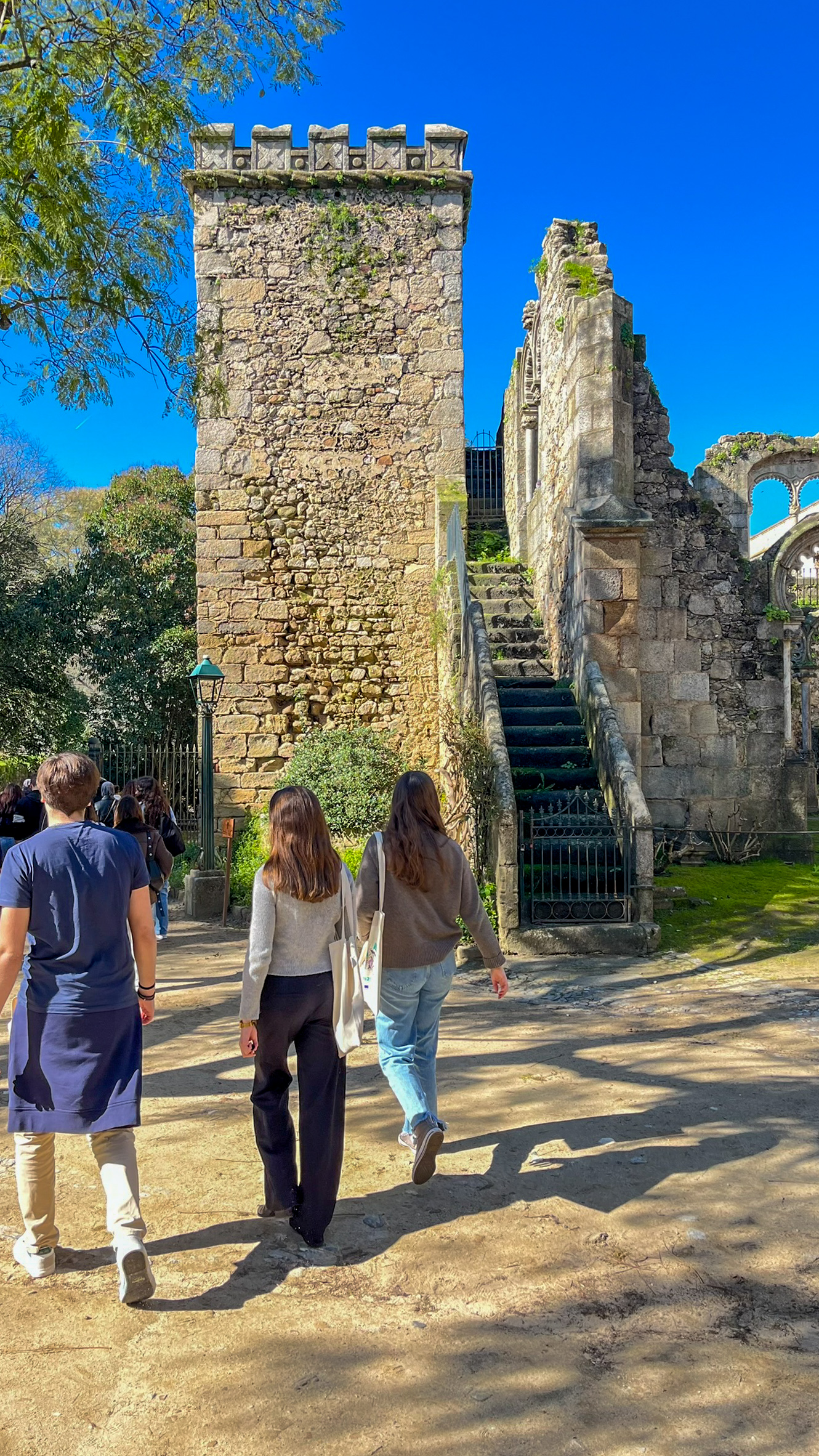
Developed to mark the World Day of Social Justice, the SDG Route combines Évora’s history, monuments and cultural heritage with the principles of the 2030 Agenda. Across 17 stops in the historic centre, visitors are encouraged to explore the connections between local places, community experiences and global challenges such as poverty, inequality, peace, sustainable consumption, climate justice and the protection of natural resources. In this way, the Route turns the city itself into an open space for learning, dialogue and Global Citizenship.
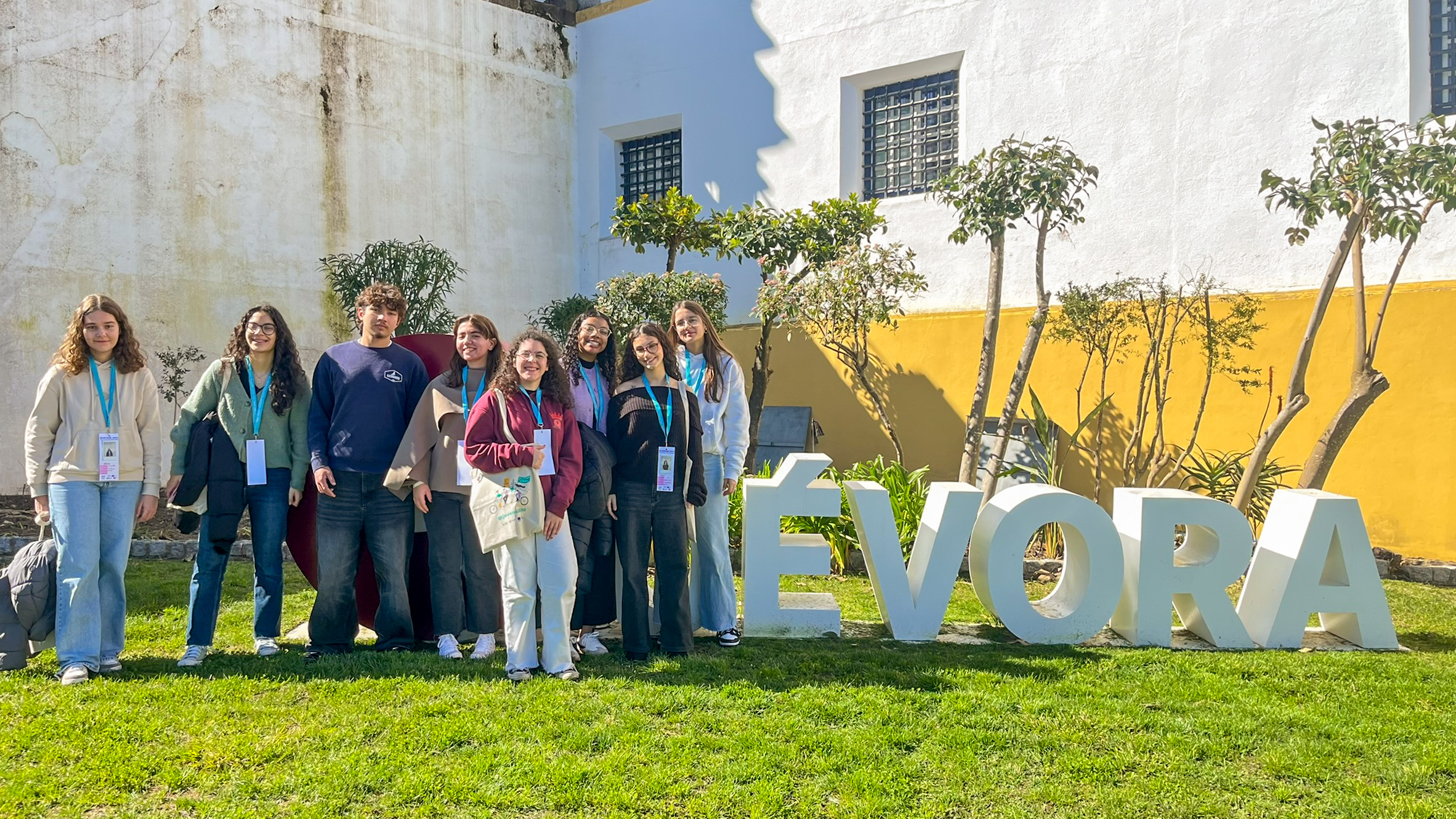
The locations and their connections to the SDGs were identified by 15 second-year Psychosocial Support students from Severim de Faria Secondary School, with the support of the technical team of the Centre for Social Innovation. Rather than focusing only on Évora’s best-known monuments, the students wanted to uncover less visible stories and offer a different perspective on the city. As Lara Alegria, one of the responsible students, explains, we “wanted to go beyond the obvious story of the buildings, choosing less famous places and sharing a different perspective of the city”.
The young participants researched the selected locations, listened to stories connected to the city and identified links between local history and contemporary global issues. “We tried to connect the stories shared by local people with topics like food, poverty, sustainability and the rehabilitation of infrastructures,” Lara explains. One example is the “Olive Tree for Peace”, planted during wartime as a symbol of hope and connected by the students to SDG 16 – Peace, Justice and Strong Institutions.
This approach lies at the heart of Education for Development and Global Citizenship: understanding that global challenges are also present in our streets, communities and everyday choices, and that local action can contribute to wider social transformation. By connecting Évora’s cultural heritage with human rights, social justice, environmental sustainability and inclusion, the Route encourages participants to question established narratives, recognise interdependence and consider their own responsibility in creating change.
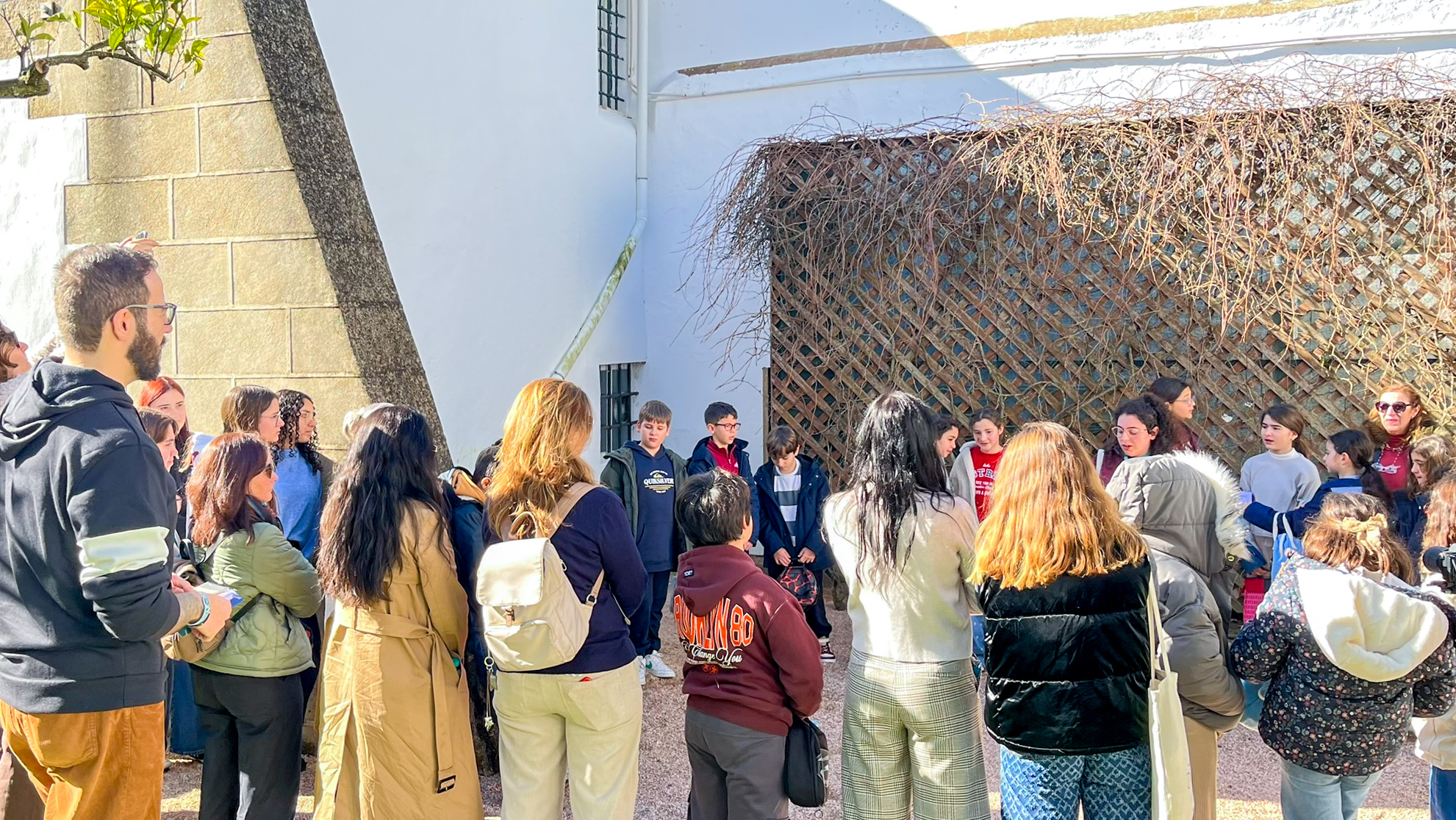
The inauguration was led by the students themselves, who guided participants along the Route and explained the reasoning behind each stop. Their involvement went far beyond learning about the SDGs. The process required them to research, cooperate, communicate publicly and translate complex global issues into messages that could be understood by different audiences. It therefore became a practical exercise in active citizenship, critical thinking and democratic participation.
For Lara, the experience revealed the importance of creating spaces where young people can express their ideas and influence their communities. “We noticed that our voice, as young people, is quite significant, and that great changes start like this. It is important that these opportunities exist to make young people more participative.”
The collaborative nature of the activity was equally important. “Working as a community allows us to promote inclusion and talk about the topics that really matter,” Lara adds. “In my class, shy people had to change the way they think to present their project in front of so many people. We proved that we can accomplish great things starting in small environments.”
The SDGs Route was developed within Rural Voices 2030, an international EU-DEAR project implemented in Portugal by IMVF. The project seeks to empower young people, particularly those living in low-density territories, with the knowledge, critical thinking skills, tools and values they need to act as agents of change in their communities.
For IMVF, the initiative demonstrates how youth participation can contribute to inclusion, social justice and climate justice. The students were challenged to look at the city’s monuments and identify connections not only with the SDGs, but also with themes explored by the project, including soil protection, gender equality, climate change, Human Rights and Global Citizenship. This creative process transformed knowledge into awareness, mobilisation and community action.
Évora’s designation as a European Capital of Culture in 2027 gives further relevance to the Route. By looking at culture through the relationship between places, people and global challenges, the initiative presents heritage not as something fixed in the past, but as a resource for reflecting on the present and imagining the future. The Route also reinforces Évora’s role as a space for participation, inclusion and active learning around sustainability.
The technical team of the Centre for Social Innovation, which supported the students throughout the creation of the Route, highlighted the importance of involving communities in developing local responses to global challenges. According to the team, the project confirms Évora as “an active space for learning and dialogue around sustainability” and demonstrates that valuing a city also means involving its residents in the collective construction of solutions.
Évora’s SDGs Route is therefore more than an itinerary through historical streets. It is an invitation to rediscover the city through the lens of Global Citizenship, to understand the links between local realities and global inequalities, and to recognise that everyone can contribute to change. By placing young people at the centre of the process, the initiative shows that citizenship is not simply something to be learned – it is something to be experienced, shared and put into practice.
The Route will remain accessible to residents, schools and visitors through an online map available in Portuguese and Spanish (more languages are expected to be included during 2027) presenting the 17 locations, their stories and their connections to the Sustainable Development Goals. Each new participant is invited not only to follow the Route, but also to reflect, discuss and consider how individual and collective action can help build more just, peaceful and sustainable communities.